
Hand-carved by Fortune Masiyiwa (Zimbabwe)
Buffalo Sculpture
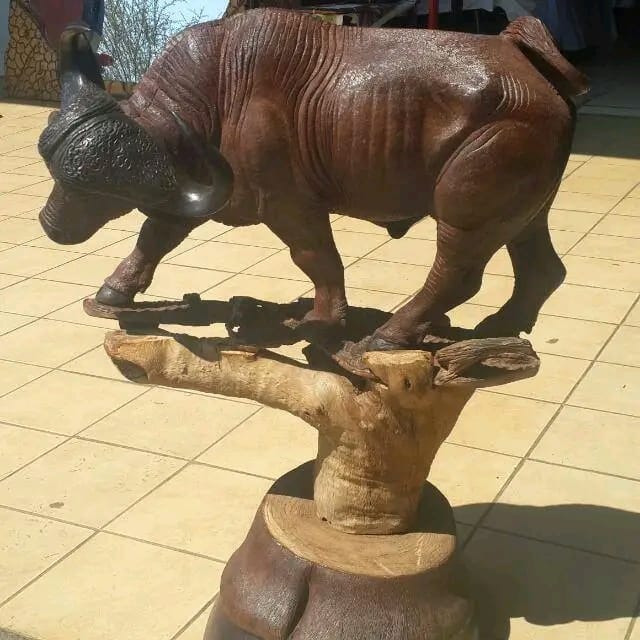
This buffalo sculpture captures tension, balance, and controlled force.
Raised above the ground on a carved natural base, the animal appears mid-advance — head lowered, horns poised, weight shifted forward. The composition creates a sense of imminent movement, as though the buffalo has paused for a single breath before pressing on.
The buffalo is often associated with determination, resilience, and collective strength. In this work, those qualities are heightened through contrast: the solidity of the animal balanced against the narrow point of contact beneath it. What could feel precarious instead feels deliberate — a quiet demonstration of mastery over form, weight, and structure.
The surface detailing is disciplined rather than decorative. Musculature, skin folds, and stance are rendered with restraint, allowing the power of the posture to speak for itself.
This is sculptural storytelling — strength held in balance.

Rhinoceros Sculpture
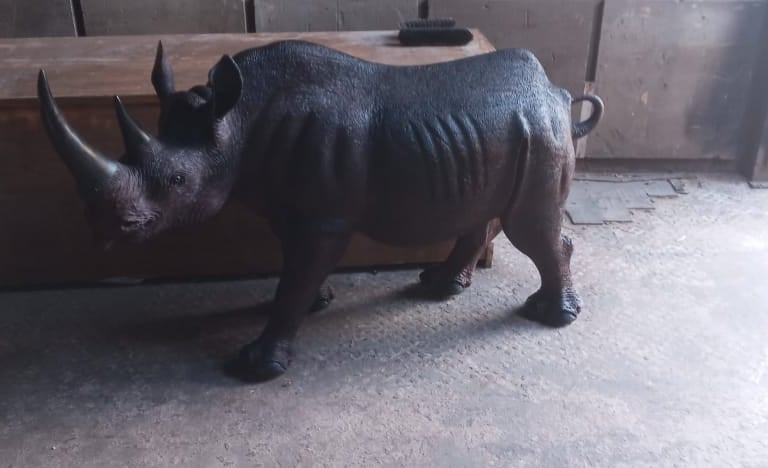
This rhinoceros sculpture is a study in quiet power.
Carved entirely by hand, the piece captures the rhino not in motion, but in presence — grounded, alert, and unyielding. The weight of the form, the deliberate texture, and the restrained detailing speak to patience, discipline, and deep familiarity with the subject.
For the artist, the rhinoceros represents more than wildlife. It symbolises survival against pressure, dignity under threat, and the strength to remain standing when circumstances are unforgiving. These qualities are embedded in the work, not narrated — you feel them before you analyse them.
This is not ornamental carving. It is contemplative work, intended to be encountered slowly.
Each sculpture is unique, shaped by hand rather than replicated by mould or machine, carrying the marks of human intention and time.
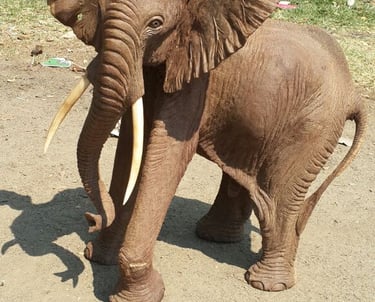
Elephant Sculpture
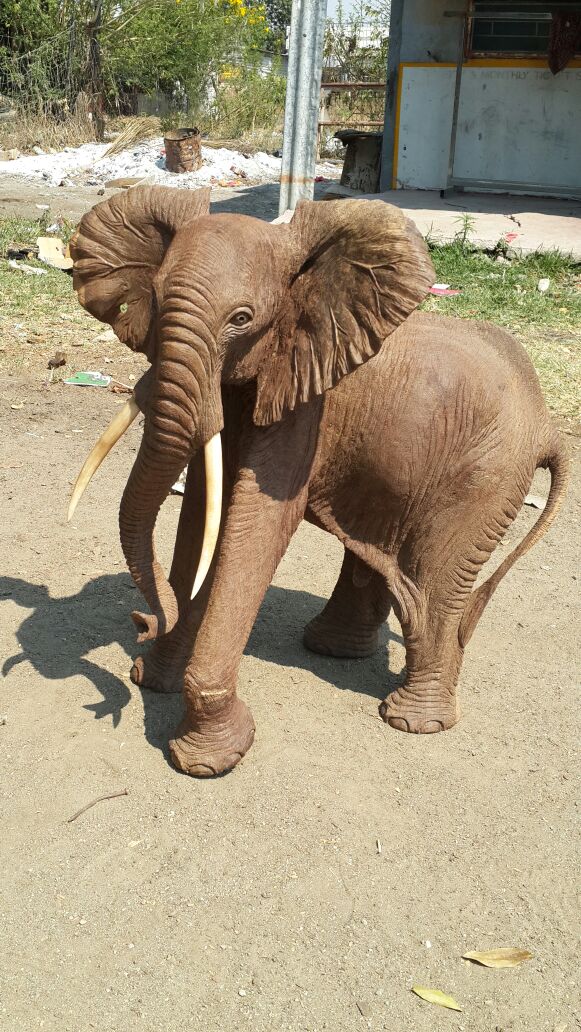
This elephant sculpture embodies presence, memory, and quiet authority.
Carved entirely by hand, the work captures the elephant mid-stride — not charging, not performing, but simply being. The posture conveys calm confidence, while the finely rendered textures of the skin, ears, and trunk reveal an artist with deep patience and control over form.
The elephant is widely regarded as a symbol of wisdom, strength, and continuity. In this piece, those qualities are expressed without exaggeration. The carving does not seek spectacle; it invites respect. Its power lies in proportion, balance, and restraint.
Every surface bears evidence of deliberate human touch. This is not decorative imitation, but interpretive sculpture — grounded, honest, and enduring.
Each piece is unique, shaped by hand and eye rather than template or machine.
Get in touch
Newmarket, Suffolk (UK)
UK-wide & international support (including Zimbabwe)
Online & in-person (The Racing Centre)
Contact
info@echoesofability.org